
The Evolution of Submissive Escorts in Modern Society

Submissive escorts aren’t just about playing a role-they’re part of a deeper shift in how people seek connection, control, and emotional release. What once lived in the shadows is now openly discussed, negotiated, and even celebrated in certain circles. This isn’t about fantasy alone. It’s about trust, boundaries, and mutual understanding between two adults who know exactly what they’re looking for.
Why do people seek submissive escorts today?
Many clients aren’t looking for sex-they’re looking for surrender. Not just physical, but emotional. A submissive escort offers a space where someone can let go of responsibility, decision-making, or daily stress. For some, it’s the first time they’ve felt safe enough to be vulnerable.
Therapists report a rise in clients who use these encounters as a form of emotional reset. One 2024 survey of 1,200 UK-based clients found that 68% said their primary goal was not sexual gratification, but psychological relief. They wanted to be told what to do, to be held, to be seen without judgment.
How has the role of the submissive escort changed over the last decade?
Ten years ago, submissive escorts were often stereotyped as passive, silent, or purely sexual. Today, the best ones are trained communicators. They set clear limits, use safe words, and often debrief after sessions. Many have backgrounds in psychology, counseling, or even theater.
The rise of platforms like OnlyFans and private membership sites has allowed submissive escorts to build personal brands. They share their philosophy, their boundaries, and even their self-care routines. Clients don’t just book a service-they book an experience shaped by trust.
What’s the difference between a submissive escort and a dominant one?
It’s not about who’s in charge-it’s about who’s in control. A dominant escort leads the scene, sets the tone, and often pushes boundaries. A submissive escort follows, but only within strict limits. Their power lies in their willingness to yield, not in their silence.
Think of it like this: a dominant escort might tie you up. A submissive escort might let you tie them up-and then ask if you’re okay afterward. The emotional labor is just as heavy, if not heavier.

Are submissive escorts more vulnerable to exploitation?
Not if they’re working independently with clear contracts. The most successful submissive escorts today operate like small business owners. They screen clients, require deposits, use third-party payment systems, and never meet alone. Many work with security teams or have panic buttons linked to trusted contacts.
Regulation is still patchy, but the industry has self-policed. Organizations like the UK Escort Network now offer certification for escorts who complete trauma-informed training. Those who do see fewer incidents, higher client retention, and better mental health outcomes.
How do clients choose the right submissive escort?
- Look for detailed profiles-not just photos, but written boundaries and expectations
- Check for reviews that mention communication, aftercare, and emotional safety
- Avoid anyone who doesn’t require a consultation call first
- Ask about their experience with trauma-informed practices
- Pay attention to how they respond to questions-clarity is a sign of professionalism
The best submissive escorts don’t just say yes. They say, ‘I can do this, but only if we agree on X, Y, and Z.’ That’s not submission-it’s sovereignty.
Is there a psychological benefit for the escort too?
Yes. Many submissive escorts report feeling more grounded after sessions. Giving control to someone else can be surprisingly freeing. It’s not about losing yourself-it’s about finding a rhythm where you don’t have to perform.
One London-based escort, who’s been working for eight years, told a journalist: ‘I used to think I was just playing a role. Now I know I’m helping people reconnect with parts of themselves they’ve buried. That’s not a job. That’s a calling.’
What does aftercare look like for submissive escorts?
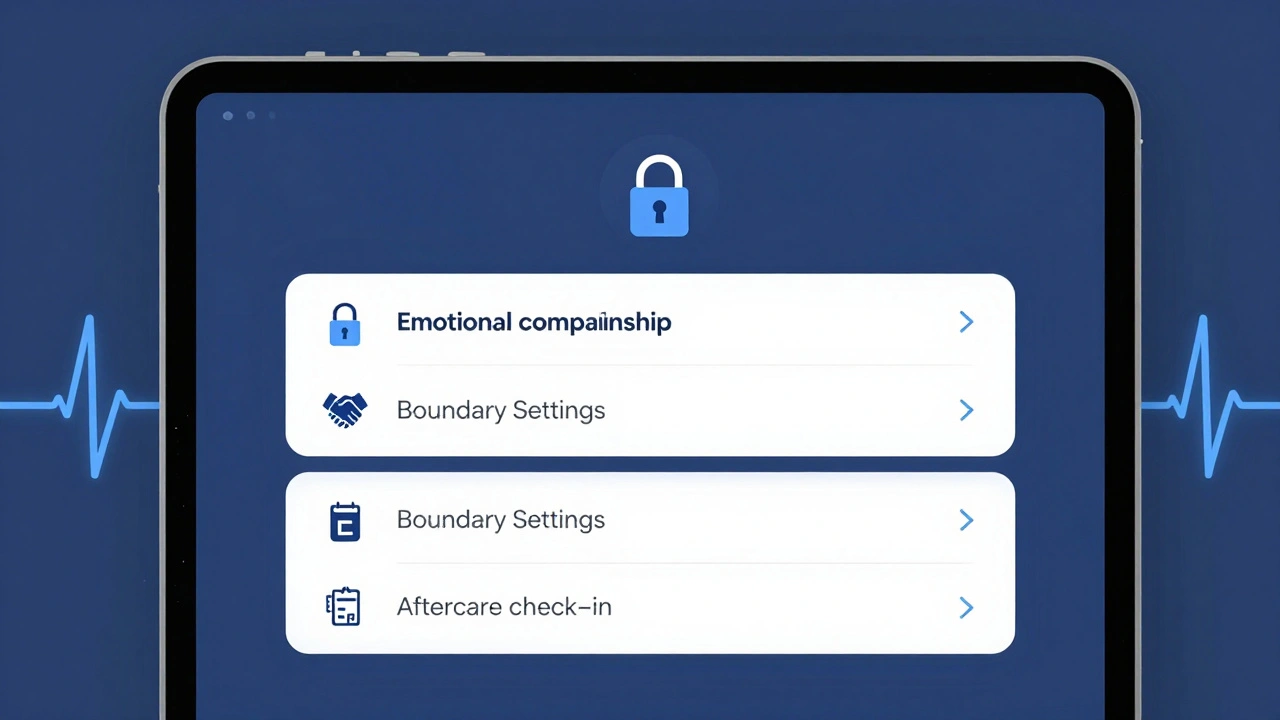
Aftercare isn’t optional-it’s essential. It can mean:
- Offering tea and quiet time
- Checking in via text the next day
- Providing a handwritten note of appreciation
- Recommending a therapist if the client seems emotionally overwhelmed
The most respected escorts track their clients’ emotional states over time. They notice patterns. They adjust. They remember names. They know when to say, ‘You don’t need to come back,’ and when to say, ‘I’m here if you need me.’
How do societal attitudes affect this work?
Public perception is slowly shifting. What was once seen as deviant is now being recognized as a form of consensual intimacy. Universities like Oxford and UCL have started including escort work in gender studies modules-not as scandal, but as a legitimate social practice.
Media portrayals are changing too. Shows like Sex Education and Normal People have normalized conversations around power exchange in relationships. The line between fantasy and real-life dynamics is blurring-and that’s helping escorts feel less stigmatized.
What’s the future of submissive escorting?
It’s becoming more professionalized. Expect to see:
- Formal training programs in emotional intelligence and trauma response
- Insurance options tailored to consensual power exchange work
- Legal recognition in some EU countries as a form of therapeutic companionship
- More male and non-binary submissive escorts entering the field
Technology will play a role too. Apps for scheduling, secure messaging, and even AI-assisted boundary reminders are already being tested. The goal isn’t to replace human connection-it’s to protect it.
Are submissive escorts the same as sex workers?
Some are, but not all. Many submissive escorts don’t engage in sexual acts at all. Their value lies in emotional surrender, physical presence, and psychological release. Calling them all ‘sex workers’ oversimplifies a complex, nuanced service.
Is it legal to hire a submissive escort in the UK?
Yes, as long as no money is exchanged for sex. The law in the UK criminalizes solicitation and brothel-keeping, but not consensual adult interactions where no sexual act is explicitly paid for. Many submissive escorts operate within this gray area by framing their services as companionship with emotional dynamics.
Can a submissive escort refuse a client’s request?
Absolutely-and they should. The most professional escorts have non-negotiable boundaries. These include no drugs, no non-consensual acts, no recording, and no pressure to exceed limits. Refusing a request isn’t a failure-it’s a sign of integrity.
Do submissive escorts need training?
Not legally, but the best ones do. Training in trauma-informed care, consent frameworks, and emotional first aid is becoming standard. Organizations like the UK Escort Network offer certified courses that cover communication, safety, and self-care.
How do you know if a submissive escort is legitimate?
Look for transparency: clear profiles, video intros, written boundaries, and a consultation process. Legitimate escorts don’t message first-they wait for you to ask questions. They answer honestly. They don’t promise the impossible. And they never pressure you to book.



6 Comments
Write a comment




Carl Grann
February 25, 2026 AT 05:42Okay but let’s be real - this whole ‘emotional reset’ thing is just therapy with a price tag and no insurance. You’re paying someone to hold you while you cry? That’s not a calling, that’s a pyramid scheme with better lighting.
And don’t get me started on ‘trauma-informed training’ - like, what’s next? A CBT-certified escort with a LinkedIn profile and a subscription box?
Colleen McGhan-Cox
February 26, 2026 AT 18:29YES. YES. YES. This is exactly what mental health infrastructure has been MISSING for DECADES!!
Emotional labor IS labor. And when someone is trained to hold space, regulate boundaries, and provide non-judgmental presence - THAT’S THERAPEUTIC. NOT SEXUAL. NOT DOMINANT. NOT SUBMISSIVE. JUST HUMAN.
Why are we still pathologizing connection? Why does ‘paying for presence’ sound sketchy but ‘paying for a 50-min talk session with a licensed therapist’ is sacred? DOUBLE STANDARD.
Also - aftercare? Handwritten notes? TEXT CHECK-INS? That’s more emotional intelligence than 80% of my exes had. We need to normalize this. Like, NOW.
PS: If you’re still stuck on ‘is it sex?’ - you’re missing the POINT. The POINT is safety. The POINT is surrender. The POINT is being seen without performance. That’s revolutionary.
Kelvin Lee
February 26, 2026 AT 21:02This is disgusting. You’re turning intimacy into a transaction. There’s a reason society has always treated this as taboo - because it’s corrosive. You’re not ‘helping people reconnect’ - you’re selling them a fantasy that erodes real relationships.
Next thing you know, people will stop dating and just hire someone to tell them they’re loved. Pathetic.
John Dickens
February 27, 2026 AT 05:28Look - I’m not here to judge. But I’ve seen this shift firsthand in LA. My cousin works as a submissive escort - she’s got a psychology degree, does yoga, and has a panic button linked to her best friend. She says the hardest part isn’t the clients - it’s explaining it to her mom.
And honestly? The clients who come back? They’re not weirdos. They’re burnt-out nurses, widowers, guys who lost their dads and never learned how to cry. They just need someone who won’t flinch when they break down.
Calling it ‘sex work’ is like calling a hospice worker a ‘bed pan attendant.’ Misses the whole damn point.
Chris Bitler
February 27, 2026 AT 17:17Real talk: the most powerful thing here isn’t the submission - it’s the consent. Clear, repeated, documented. That’s rare in any relationship.
People think power exchange is about control. But it’s actually about trust. And that’s beautiful.
Ronnie Ryan
February 28, 2026 AT 21:12While I am not entirely convinced of the epistemological validity of commodifying vulnerability as a service paradigm, I must acknowledge the phenomenological emergence of consensual power dynamics as a legitimate form of interpersonal negotiation in late-stage capitalism.
That said, the notion that 'aftercare' - which, by the way, is misspelled as 'after care' in some literature - constitutes a therapeutic intervention, raises serious ethical and regulatory concerns regarding the boundaries between professional psychotherapy and informal emotional labor.
Moreover, the normalization of such practices through media representations - while aesthetically progressive - may inadvertently dilute the ontological gravity of authentic human connection, replacing it with curated, transactional intimacy.
And yet… I’ve known people who’ve been healed by this. So maybe I’m wrong.
…I think I need to sit with this.