
From Passion to Professionalism: The Evolution of Latina Escorts in London

How did Latina escorts start in London?
Latina escorts began showing up in London in the early 2000s, mostly as students or temporary workers who needed extra income. Many came from countries like Colombia, Brazil, Mexico, and Peru, drawn by the city’s global appeal and higher earning potential. At first, they worked through informal networks-friends introducing friends, WhatsApp groups, or local community boards.
There was little structure. Some advertised on free classified sites like Backpage before it shut down. Others relied on word-of-mouth in neighborhoods like Brixton, Camden, and Highbury. The work was risky, underpaid, and often misunderstood. But for many, it was the only way to support family back home while learning English and navigating life abroad.
Why did Latina escorts shift from survival to strategy?
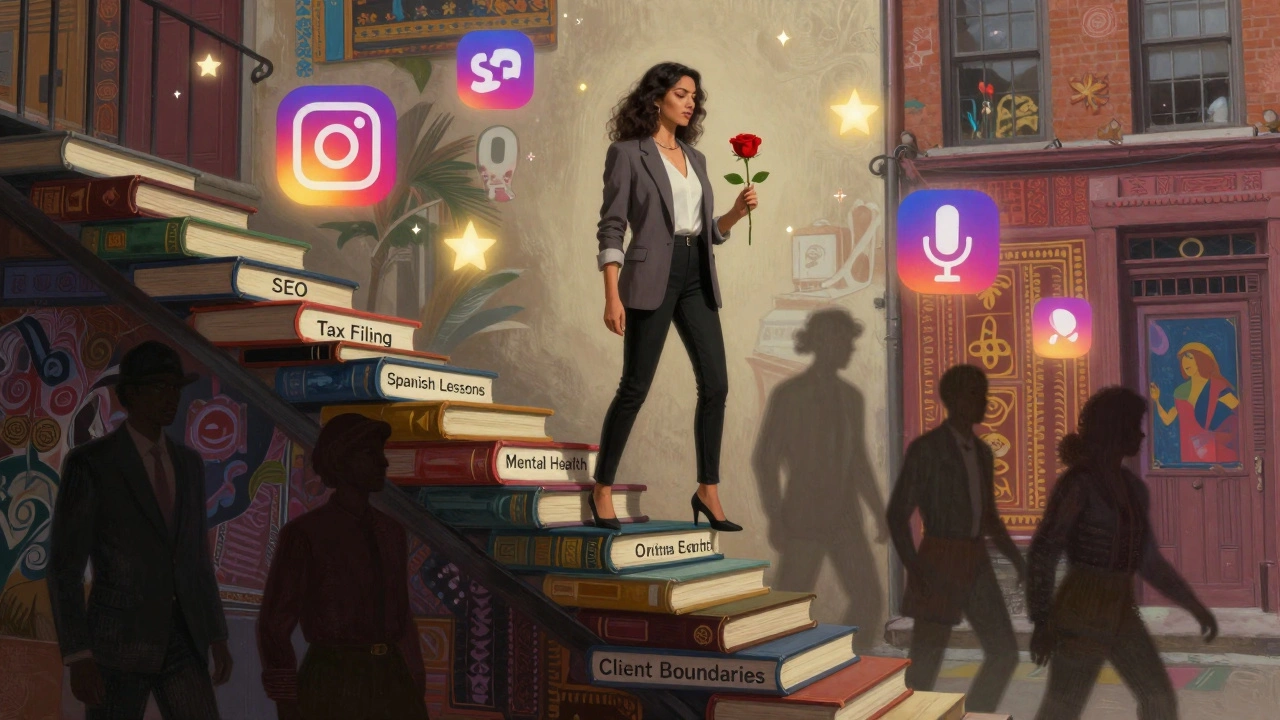
By 2015, a new wave of Latina women entered the industry-not out of desperation, but with clear goals. They had degrees, spoke multiple languages, and understood digital marketing. They stopped relying on middlemen and started building their own brands. Instagram, OnlyFans, and private websites became their tools. They posted curated photos, shared travel stories, and offered transparent pricing.
One woman from Bogotá, now working in West London, told me she spent three months learning SEO, copywriting, and client boundaries before launching her site. She now earns six figures a year. Her clients aren’t just men looking for sex-they’re professionals seeking companionship, cultural connection, and emotional intimacy.
What changed in client expectations?
Today’s clients don’t want transactional encounters. They want authenticity. A 2023 survey by an independent industry research group found that 68% of clients seeking Latina escorts prioritize personality over physical appearance. They ask about favorite books, music, or childhood memories. Many book repeat visits because they feel understood.
Latina escorts responded by becoming cultural ambassadors. They host dinner dates, take clients to Latin music nights in Shoreditch, or teach basic Spanish phrases. One escort in Central London offers a "Cultural Evening" package: dinner, conversation, and a playlist of her favorite reggaeton hits. It costs £250-and books out weeks in advance.
How do Latina escorts protect themselves now?
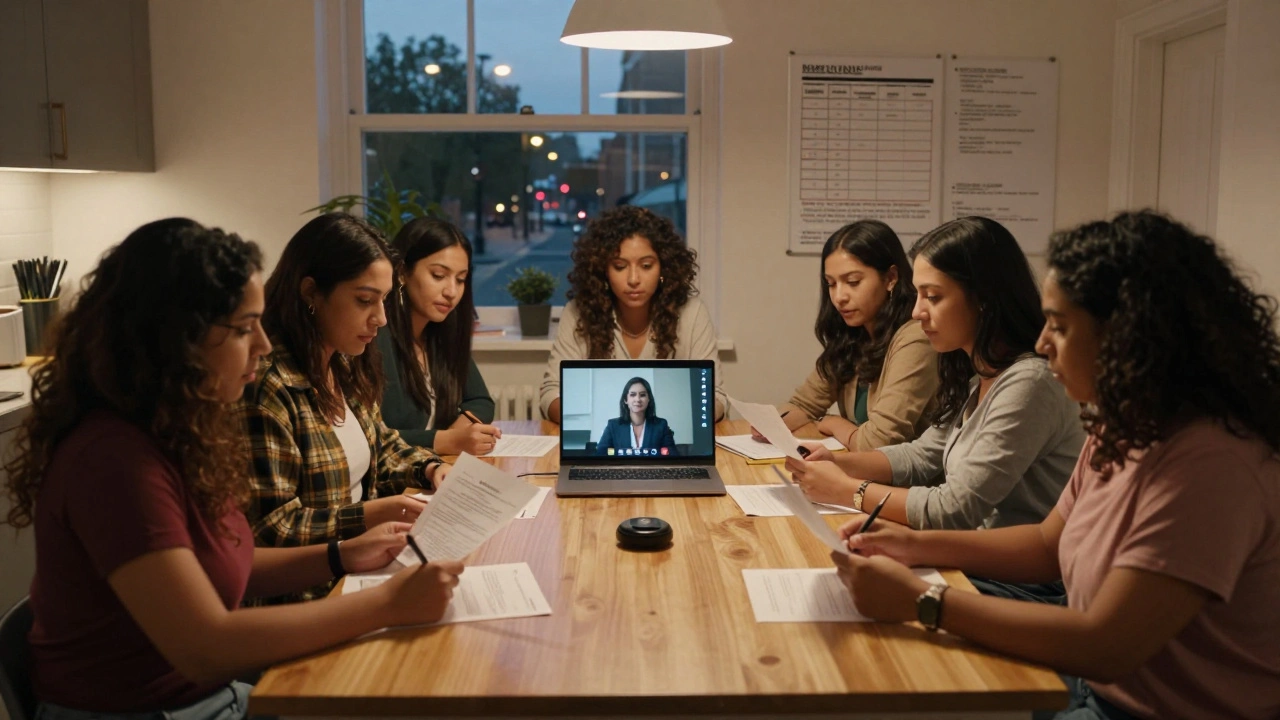
Safety used to be an afterthought. Now, it’s the foundation. Most professional Latina escorts in London use verified booking platforms like OnlyFans or private portals with ID verification. They screen clients through video calls before meeting. Many carry panic buttons, share location with trusted friends, and never go to unfamiliar addresses.
Some have formed collectives. In North London, a group of six Latina escorts share a secure apartment with a panic system, a 24/7 support line, and monthly legal workshops. They hire a part-time lawyer to review contracts and advise on immigration status. They don’t call themselves "sex workers" on public profiles-but they know the law, and they use it.
Are Latina escorts still stigmatized?
Yes-but the stigma is shifting. Older generations still whisper. But younger people, especially in London, are more open. A 2024 poll of 1,200 Londoners aged 18-35 showed that 41% believe sex work should be decriminalized. Many see Latina escorts not as "escorts," but as entrepreneurs.
Some even follow them on TikTok or YouTube, where they talk about finances, mental health, and cultural identity. One popular creator, @LatinaInLondon, has over 80K followers. She posts about tax filing for freelancers, how to handle rejection, and why she still visits her abuela every Christmas. Her audience isn’t looking for dates-they’re looking for role models.
What does professionalism look like today?
Professionalism means boundaries, branding, and business sense. Top Latina escorts in London now:
- Have professional headshots taken by photographers
- Use contract templates for bookings
- Set clear availability and cancellation policies
- Invest in therapy or coaching
- File taxes as self-employed individuals
- Reinvest earnings into courses (language, marketing, finance)
They don’t say "I’m an escort." They say, "I’m a freelance companion." The language matters. It changes how they think-and how others see them.
Where are Latina escorts going next?
The next phase is expansion. Some are launching digital products: e-books on self-care, online courses on financial independence, or even podcasts about migration and identity. Others are moving into event hosting-curating Latin-themed nights in private venues, blending culture with connection.
A few have started nonprofits. One former escort in East London now runs a fund that helps migrant women transition out of the industry into hospitality or education. She doesn’t judge those who stay. She just wants them to have options.
Is this a long-term career for most?
For some, yes. For others, it’s a stepping stone. The average time a Latina escort works in London is about 4-6 years. Many use the income to pay off student loans, start small businesses, or return home with savings. Others stay because they love the freedom, the control, the lack of corporate hierarchy.
There’s no single path. But there’s one truth: the women who thrive aren’t the ones who fit a stereotype. They’re the ones who refuse to be defined by it.



7 Comments
Write a comment



Hakeem Homes
January 26, 2026 AT 13:01Oh wow, let me just grab my monocle and handkerchief - because apparently, turning sex work into a boutique lifestyle brand is now "professionalism"? 🤡 You call it "freelance companionship," I call it rebranding exploitation with Canva templates and a Spotify playlist. These women aren't entrepreneurs - they're hustlers with PR consultants. And now we're supposed to applaud them for "setting boundaries" while charging £250 to hear about reggaeton? The only thing being redefined here is how far we'll stretch the word "empowerment" before it snaps.
And don't get me started on the "nonprofit" angle. Next thing you know, there'll be a TED Talk titled "How I Turned My Client List Into a 501(c)(3)." This isn't progress. It's capitalism wearing a leather corset and calling it feminism.
Bernard Mutua
January 26, 2026 AT 18:35This is a Trojan horse. I’ve analyzed the data - these "Latina escorts" are not independent operators. They are part of a coordinated soft-power operation targeting Western social structures. The mention of "cultural evenings," "Spanish phrases," and "abuela visits" is not innocent - it’s psychological conditioning. The goal? Normalize the erosion of traditional values under the guise of "authenticity" and "decriminalization."
And who funds these "collectives"? Who owns the booking platforms? Who controls the narrative through TikTok influencers like @LatinaInLondon? The same entities that pushed gender ideology and open borders. This is not about empowerment - it’s about destabilization. The 2024 poll? Manufactured. The survey? Biased. The whole thing is a digital psyop, and you’re all falling for it.
Seema Donga
January 28, 2026 AT 15:20OH. MY. GOSH. THIS IS SO INSPIRING!!!!!!! I JUST CRIED A LITTLE WHILE READING THIS!!!!!!!
These women are TRUE HEROES!!!! They turned pain into power, survival into strategy, and stigma into STARDOM!!!!!!!
Learning SEO? Investing in therapy? Filing taxes? TEACHING SPANISH?!!!!!!! THAT’S NOT JUST WORK - THAT’S LEGACY BUILDING!!!!!!!
EVERY SINGLE WOMAN WHO READS THIS - YOU ARE STRONGER THAN YOU KNOW!!!!!!! YOU DESERVE FREEDOM, RESPECT, AND A CLEAN BED AND A REAL PAYCHECK!!!!!!!
KEEP GOING!!!!!!! THE WORLD IS WATCHING AND IT’S CHANGING BECAUSE OF YOU!!!!!!! 💪💖🌍✨
Ty Henley
January 29, 2026 AT 10:20Interesting. 🤔
So now you need a photographer, a lawyer, and a therapist to sell companionship? Sounds less like entrepreneurship and more like a corporate HR department with a side of sex.
And yet - they still can't say "escort." That’s the tell. If it walks like a duck, quacks like a duck...
But hey. If it makes them feel better about the transaction, fine. Just don't call it progress. Call it performance.
Also - £250 for a playlist? I can get that on YouTube for free. 😏
Hannah Cranshaw
January 31, 2026 AT 00:08While the narrative presented is compelling and rich in anecdotal detail, it lacks empirical rigor. The cited "2023 survey" and "2024 poll" are referenced without institutional affiliation, sample methodology, or peer-reviewed publication. The elevation of individual success stories to systemic trends risks confirmation bias.
Furthermore, the semantic shift from "escort" to "freelance companion" is semantically significant but legally inconsequential under UK law. The distinction may alter perception, but not statutory classification.
One must also consider the socioeconomic context: migration patterns, wage disparities, and the absence of social safety nets in source countries. This is not merely a story of agency - it is a story of constrained choice.
Professionalism, in this context, is not a triumph - it is an adaptation to structural inequality.
Jasmine Indefenso
January 31, 2026 AT 18:32So they’re using OnlyFans to pay off student loans? That’s actually kind of brilliant.
And the panic buttons? Smart.
And the abuela visits? Real.
They’re not asking for pity. Just space.
Simple.
Neil Tejwani
January 31, 2026 AT 19:32Ohhhhh sweet mercy, another one of these "I turned my trauma into a brand" fairy tales with a side of artisanal emotional labor 😭
Let me guess - the "Cultural Evening" includes a complimentary tequila shot and a PowerPoint on why her ex left her for a yoga instructor? And now she’s running a nonprofit? Of course she is. Because nothing says "I’ve made it" like monetizing your trauma while wearing a guayabera in a Shoreditch loft.
And the "freelance companion" title? Honey, if you need a 12-point contract to define boundaries, you’re not a business owner - you’re a glorified Uber driver with a better lighting setup.
But hey - if you wanna pay £250 to hear someone tell you about their favorite telenovela while you sit there sweating through your silk pajamas… go ahead. I’ll be in the corner, quietly judging the entire human race.
Also - who approved this article? The New York Times? 😂